 Mount Batur Sunrise Hike Tours
Best Time to Hike Mount Batur
Last reviewed August 2026
The best time to hike Mount Batur is June through September, when rainfall at caldera level drops to between 45 and 72 mm a month and the odds of a clear sunrise are at their highest for the year. The trade is company: those are also the busiest mornings on the trail. April, May and October are the compromise most travellers should take. December through February is the only stretch where the sunrise itself becomes a gamble rather than a plan.
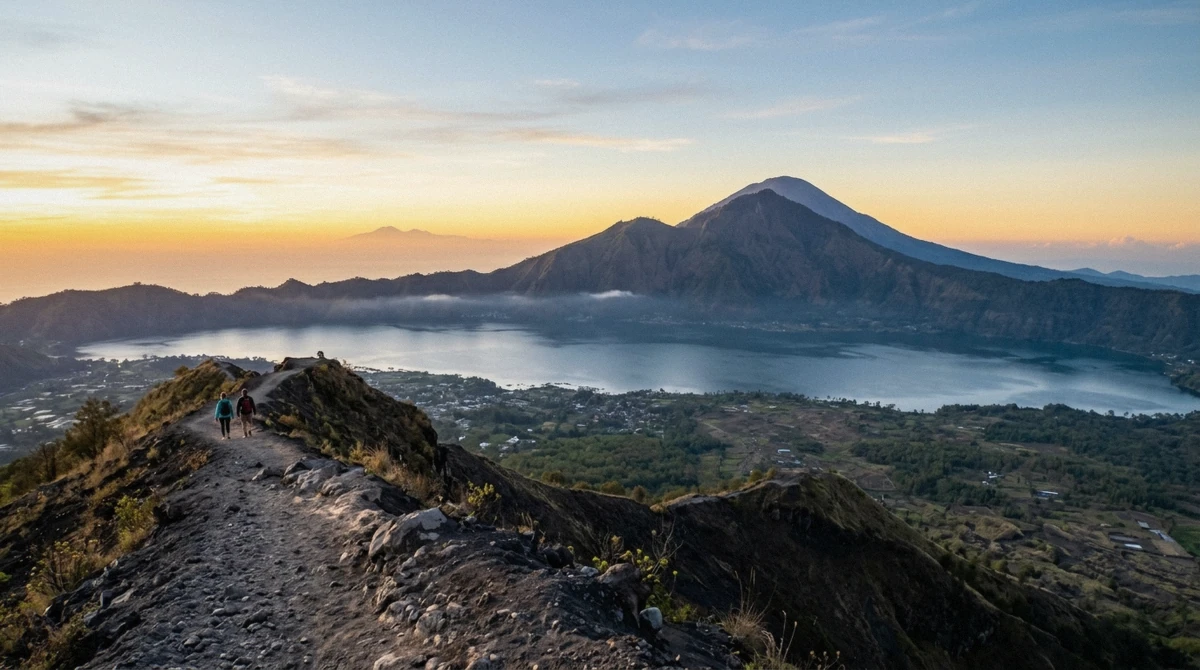
Quick answer The best months, the gamble months, and what time the sun actually rises
June to September gives the driest, clearest mornings, with August the driest month at about 45 mm of rain and the coldest dawn at around 14°C. April, May and October are close behind with fewer people on the trail. November to March brings 170 to 300 mm a month and the highest chance of climbing for ninety minutes to look at cloud. Sunrise itself moves from about 05:50 in late October and November to about 06:35 in June and July, which is why pickup times shift through the year.
Key takeaways
- Driest month: August, about 45 mm of rain; wettest: February, about 295 mm
- Sunrise runs 05:50 to 06:35 across the year, so confirm pickup the evening before with your Mount Batur sunrise hike tour
- Dry season is also peak crowd season, which the small-group trek partly solves
- Wet-season mornings still run: free cancellation to 24 hours out makes them bookable
- Coldest dawns coincide with the clearest ones, so check what to wear before July and August dates
Month by Month, With Real Numbers
Rainfall, dawn temperature and the verdict
Rainfall and temperature below are computed from the 2016 to 2025 ERA5 reanalysis for the Batur trailhead area at 1,532 metres, rather than taken from a coastal Bali forecast. Sunrise times are from published solar tables for Bali. Rain totals are the monthly average, so a wet month is not a washout, it is a month where more mornings go wrong.
| Month | Rain | Dawn temp | Sunrise | Verdict |
|---|---|---|---|---|
| January | 233 mm | 15.8°C | About 06:15 | Wettest stretch, book flexibly |
| February | 295 mm | 15.7°C | About 06:20 | The wettest month of the year |
| March | 225 mm | 15.7°C | About 06:20 | Improving late in the month |
| April | 142 mm | 15.5°C | About 06:15 | Shoulder, good odds and thinner crowds |
| May | 94 mm | 15.3°C | About 06:25 | Excellent, dry season beginning |
| June | 72 mm | 14.7°C | About 06:30 | Peak conditions, peak company |
| July | 62 mm | 14.0°C | About 06:35 | Latest sunrise of the year, very dry |
| August | 45 mm | 13.7°C | About 06:30 | Driest and coldest dawns, busiest trail |
| September | 56 mm | 14.2°C | About 06:10 | Excellent, crowds easing |
| October | 102 mm | 14.9°C | About 05:55 | Shoulder, early sunrise, good value |
| November | 172 mm | 15.6°C | About 05:50 | Earliest sunrise, wet season returning |
| December | 252 mm | 15.8°C | About 06:00 | Wet, and busy over the holidays |
Reading the table properly
The temperature column barely moves, which is the first useful surprise. Dawn at caldera level ranges from 13.7°C in August to 15.8°C in December and January, a spread of two degrees. Nobody should choose a month for warmth here.
The rainfall column moves by a factor of six. February averages 295 mm against August's 45 mm. That is the whole decision, because rain at 04:00 does not just make you wet, it puts cloud between you and the thing you climbed for.
And the sunrise column is the one that catches people planning around a fixed schedule. In November the sun is up by about 05:50; in July it waits until about 06:35. Operators shift their pickups accordingly, so the time your friend was collected in March is not the time you will be collected in July.
Why the Dry Season Wins
What 45 mm versus 295 mm actually means on the mountain
In August, rain falls on a small number of mornings and the caldera air is generally clear enough to see Mount Rinjani on Lombok, well over 100 kilometres away. In February, cloud sits in the caldera on many mornings and can arrive between the time you left your hotel and the time you reach the rim.
That second point is the one that costs people their morning. The forecast at 22:00 is not the sky at 05:30, and Batur generates its own cloud as the sun warms the slopes. Which is why the practical advice is to check the outlook for a clear morning rather than a clear night, and to book a date that has margin around it.
None of this makes the wet season pointless. It makes it a different purchase: a cheaper, emptier mountain with a real chance of no view.
The cost of the good months
Peak dry season is also peak Bali. Estimates put the trail at roughly 300 to 600 hikers on a busy morning, and June through August is when that upper figure applies.
Two of the Mount Batur sunrise treks exist specifically for this. The five-person small group fixes who you walk with, and the Kayu Padi route uses a quieter approach to the same summit. Neither empties the rim at first light, and no month does either.
If the crowd matters more to you than the odds of a clear sky, September and October are the sweet spot: still dry, noticeably thinner, and with sunrise creeping earlier so the whole morning ends sooner.
Booking in the Wet Season Without Wasting the Trip
How to give yourself two chances
The single most effective tactic between November and March is to plan the hike for early in your stay rather than the day before you fly. If the first attempt clouds out or gets cancelled, you still have days left to try again.
Every listing compared here allows free cancellation up to 24 hours before the start time, and all of them offer reserve now, pay later. That combination means holding a date costs nothing while you watch the forecast, and moving it costs nothing until the day before.
Operators do reach out when the forecast makes the trek pointless. What nobody covers is the morning that looked fine at midnight and clouded in at 05:00, which is the specific risk you accept by hiking in February.
- Book the hike for the first half of your trip so a second attempt is possible
- Use reserve now, pay later to hold a date without committing money
- Watch the forecast for a clear morning rather than a clear night
- Sleep in Ubud rather than the south coast, which cuts an hour of night driving each way
- Pack a waterproof shell rather than a windproof one from November to March
- Have a fallback plan for the day, since you will be awake at 02:00 regardless
What the wet season gives you back
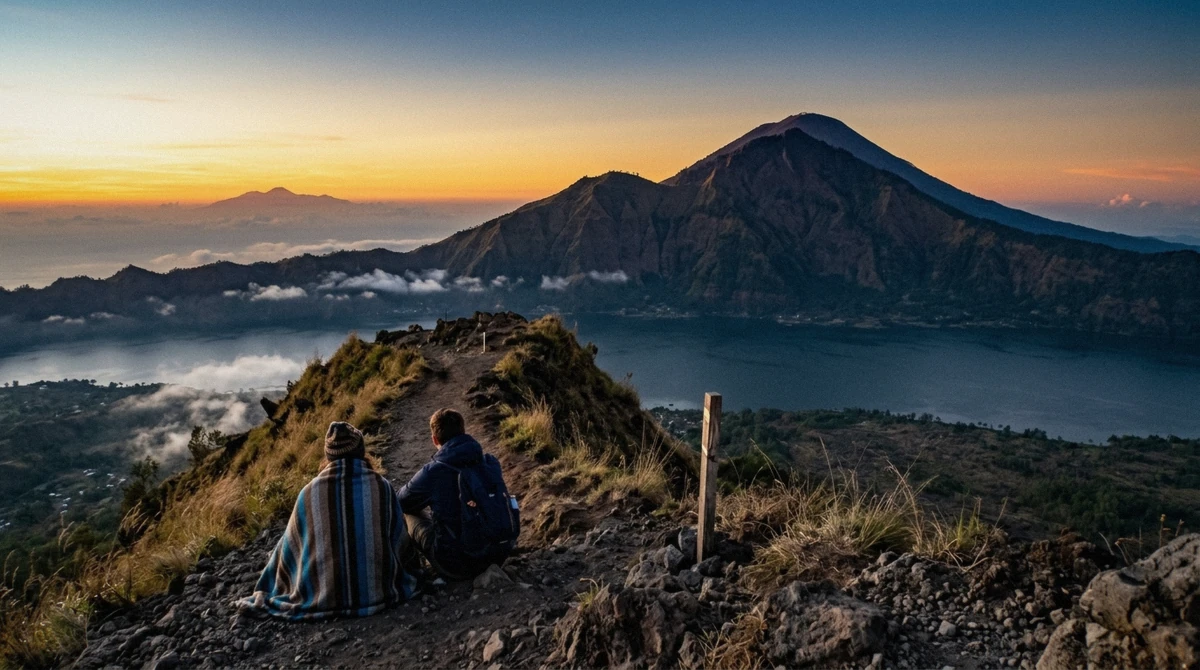
Fewer people, greener slopes and a caldera that is often at its most dramatic when weather is moving through it. Some of the best photographs from this mountain come from mornings that were not clear, when cloud sat below the rim and the summit stood above it.
There is also the practical matter of availability. Dry-season dates on the capped small-group departures go first, and a February booking made a week out is straightforward where an August one may not be.
The Crowd Calendar
When the trail is at its busiest
Three patterns stack on top of the seasons. European and Australian school holidays in July and August put the most people on the mountain. Indonesian public holidays and the period around Nyepi bring domestic visitors to the caldera. And the week between Christmas and New Year is busy despite being one of the wettest stretches of the year.
Weekday mornings are quieter than weekends across the whole year, and the difference is noticeable rather than dramatic. If your dates are flexible by a day or two, take a Tuesday over a Saturday.
The honest limit on all of this: no combination of month and weekday makes Mount Batur a quiet mountain at sunrise. It is the most-climbed peak in Bali and there is a reason the operators run to a schedule.
| Window | How busy | Why |
|---|---|---|
| July and August | Busiest of the year | European and Australian school holidays meet the driest weather |
| Late December to early January | Very busy | Holiday travel, despite it being one of the wettest stretches |
| June and September | Busy | Dry season either side of the school-holiday peak |
| April, May and October | Moderate | Shoulder months with good weather odds |
| February and March | Quietest | Wettest months, and the hardest ones for a clear sunrise |
What to check the night before
Four things, and they take five minutes. The forecast for cloud between 05:00 and 07:00 rather than rain during the day. Your pickup time, confirmed with the operator rather than assumed from the booking page, because it moves with the season. The PVMBG bulletin for the volcano's current alert level. And your bag, packed with the layer, the cash and the water before you go to bed.
Do those and the only variable left is the sky, which nobody controls and which is the reason the month you pick matters more than anything else on this page.
Which Month Suits Your Trip
If You can pick any month and want the best odds of a clear sunrise
August or September. August is the driest at about 45 mm; September is nearly as dry with fewer people and an earlier sunrise.
If You want dry weather without peak crowds
April, May or October. Rain runs 94 to 142 mm and the trail is noticeably thinner than in July and August.
If Your trip falls between December and February
Book early in your stay with free cancellation, watch the forecast, and accept that the view is a gamble rather than a plan.
If You want the shortest night
Late October or November, when sunrise arrives around 05:50 and pickup is correspondingly earlier and shorter.
If You are travelling in peak season and crowds bother you
Book the capped small group or the quieter Kayu Padi approach well ahead, since those places go first.
Questions About Timing
What is the best month to hike Mount Batur?
August, on the numbers. It is the driest month at the trailhead area with about 45 mm of average rainfall and therefore the highest odds of a clear sunrise. It is also the coldest dawn of the year at around 14°C and the busiest month on the trail, so September and October are the better choice if crowds bother you more than a slightly higher rain risk.
What time does the sun rise on Mount Batur?
Between about 05:50 in late October and November and about 06:35 in June and July. Groups aim to be on the rim by 05:15 to 05:45, which sets pickup at 01:30 on the south coast and 02:15 to 02:30 in Ubud. Confirm your time with the operator the evening before rather than assuming last month's schedule.
Is the wet season a write-off for Mount Batur?
No, but it changes what you are buying. November to March averages 170 to 300 mm of rain a month and cloud can close the view even on a morning that looked fine at midnight. Treks still run, prices are the same, and the mountain is emptier. Book early in your stay so a second attempt is possible.
Which day of the week is quietest on the trail?
Weekdays, and Tuesday through Thursday in particular. The difference is real but modest, since this is a mountain that runs on tour schedules rather than local weekend traffic. School holidays in July and August and the week around New Year matter far more than the day you choose.
How likely is it that the sunrise is clouded out?
Nobody publishes a reliable percentage, and any site that gives you one is guessing. What the data supports is the shape: dry-season mornings from June to September are clear far more often than wet-season mornings from November to March, on a rainfall spread of roughly six to one between August and February.
Should I book Mount Batur in advance or on arrival?
In advance. Platform prices start below the local walk-up rate, free cancellation runs to 24 hours out, and dry-season places on the capped departures sell first. Booking ahead also lets you choose the date for the forecast instead of taking whichever morning a hotel desk can arrange. Full numbers are in our cost breakdown.
Is a sunset hike an alternative to the sunrise?
A handful of operators run sunset treks, and none of the listings compared here is one. Afternoons in the caldera are cloudier than mornings across most of the year, the rim faces east toward Mount Agung where the light arrives at dawn, and descending loose scree in fading light with tired legs is the riskiest way to finish. A sunset climb buys a warmer, later, quieter start and costs you both the view and the safer descent.