 Mount Batur Sunrise Hike Tours
What to Wear on the Mount Batur Sunrise Hike
Last reviewed August 2026
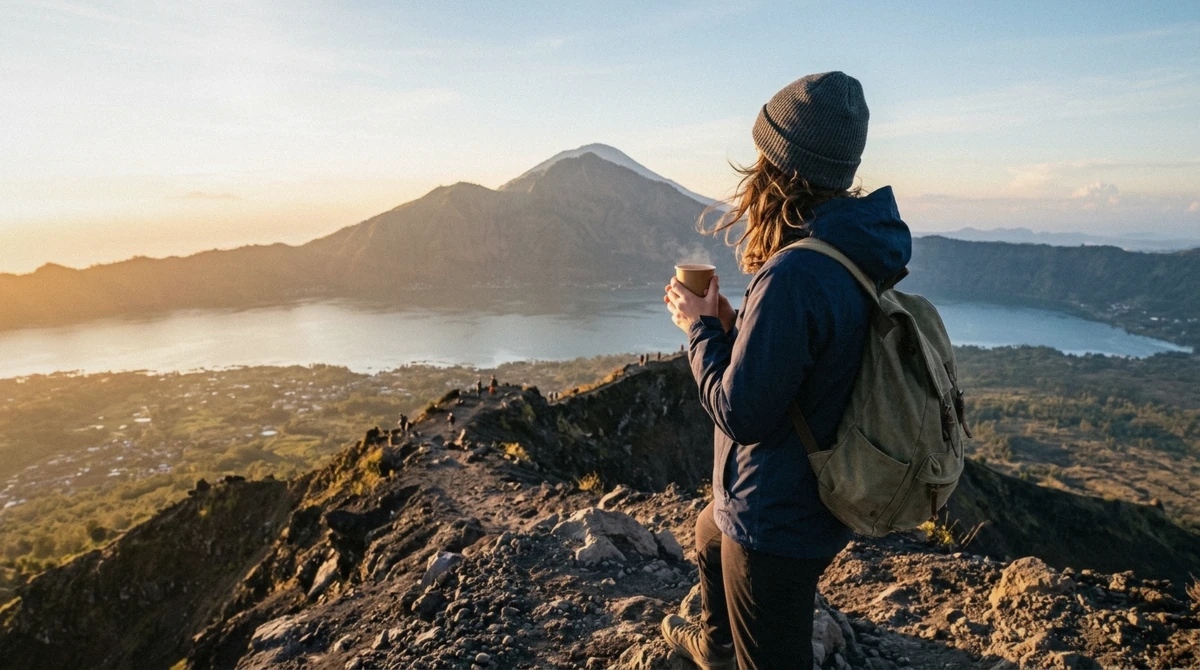
What to wear on the Mount Batur sunrise hike comes down to one number that nobody checks: dawn on the rim runs about 10 to 15°C with wind, against roughly 30°C on the coast you left three hours earlier. You arrive at that temperature soaked in sweat from climbing 600 metres, then sit still for forty minutes waiting for the light. A windproof outer layer is the single item that decides how the morning feels. Everything else on this page is detail.
Quick answer The one layer that matters, the shoes, and what the tour already gives you
Wear a t-shirt, a light mid-layer and a windproof jacket, with trainers or hiking shoes that have real tread. Add gloves and a beanie between June and September, when dawn at caldera level averages around 14°C before wind chill. Bring sunglasses and sunscreen for the descent, which is exposed and warm by 07:30. You do not need a headlamp or trekking poles: every tour hands both out at the trailhead.
Key takeaways
- The windproof layer matters more than warmth, because you arrive at the rim wet with sweat
- Trainers with tread are fine; smooth soles on the scree descent are the actual hazard, as our difficulty guide explains
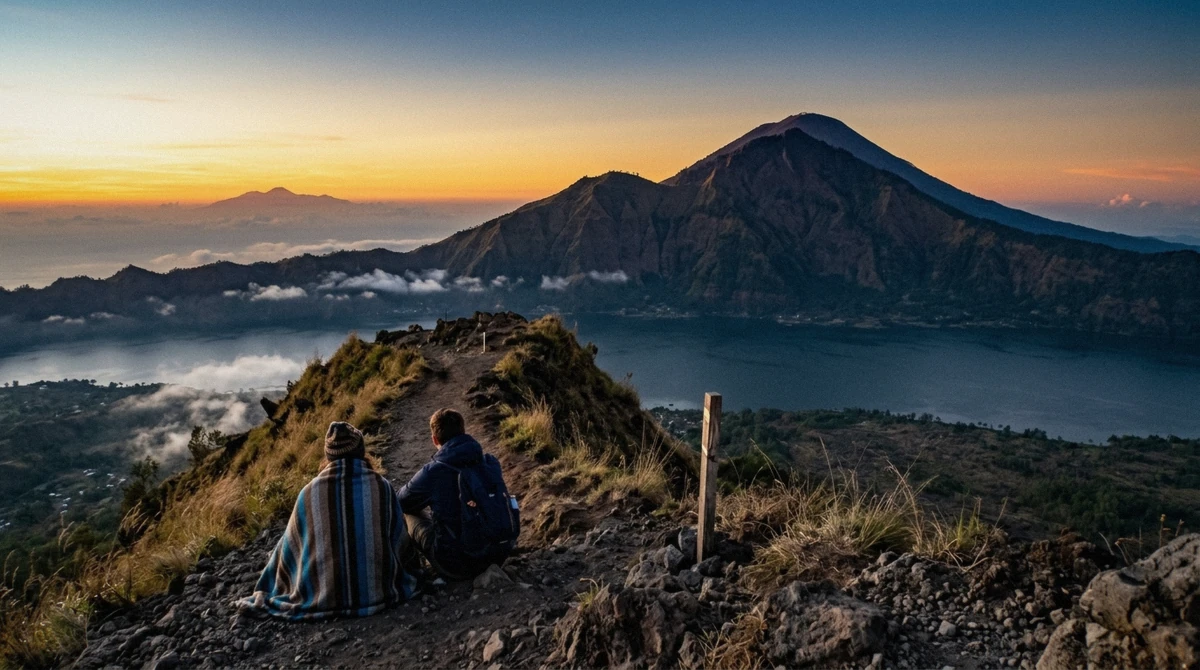
- Blankets rent on the summit for about IDR 50,000, which is the fallback for people who got this wrong
- Headlamp and trekking pole are supplied on every one of the Mount Batur sunrise hike tours compared here
- Coldest dawns fall in July, August and September, which are also the clearest months
How Cold It Actually Gets
Dawn temperature, month by month
Figures below are average daily minimum temperatures for the Batur trailhead area at 1,532 metres, computed from the 2016 to 2025 ERA5 reanalysis. Dawn is when the daily minimum happens, so these are the numbers you will actually be sitting in. The summit at 1,717 metres runs roughly a degree colder again, and wind takes more on top of that.
| Month | Dawn temperature | In Fahrenheit | What to add |
|---|---|---|---|
| January | 15.8°C | 60°F | Windproof shell, rain in the forecast |
| February | 15.7°C | 60°F | Windproof shell, rain in the forecast |
| March | 15.7°C | 60°F | Windproof shell |
| April | 15.5°C | 60°F | Windproof shell |
| May | 15.3°C | 59°F | Windproof shell, light mid-layer |
| June | 14.7°C | 58°F | Add gloves |
| July | 14.0°C | 57°F | Gloves and a beanie |
| August | 13.7°C | 57°F | Gloves and a beanie, the coldest dawns of the year |
| September | 14.2°C | 58°F | Gloves and a beanie |
| October | 14.9°C | 59°F | Light mid-layer |
| November | 15.6°C | 60°F | Windproof shell, rain returns |
| December | 15.8°C | 60°F | Windproof shell, rain in the forecast |
Why 14°C feels like less than it sounds
Fourteen degrees is a mild spring morning in most of Europe and nobody would think twice about it. Three things change that here.
You are wet. Climbing 500 to 600 metres in ninety minutes soaks a shirt even in cool air, and evaporation from wet fabric in wind is what actually makes people miserable on that rim.
You are still. The climb generates heat; sitting on volcanic rock waiting for the sun does not. The coldest half hour of the whole trip is the one you paid for.
And you are acclimatised to the opposite. Sea-level Bali runs 28 to 31°C, so coming from the coast, your body reads 14°C as genuinely cold rather than as a pleasant morning. This is why travellers who hike regularly at home still get caught out here.
The Packing List
What to bring, in order of how much it matters
Nothing on this list is specialist equipment and none of it needs buying in Bali. If you are choosing between two items, take the jacket.
- A windproof jacket or shell, the single item that decides the morning
- A light mid-layer, fleece or long sleeve, to go under it at the top
- Trainers or hiking shoes with visible tread; smooth soles slip on the descent
- Long trousers or leggings, warmer at the rim and better against volcanic dust
- Gloves and a beanie from June to September, absurd in Bali and correct on this mountain
- A small daypack, because you carry the mid-layer for the first hour
- Your own water, at least a litre; one bottle is usually included and it is not enough
- IDR 100,000 to 150,000 in small notes for blankets, drinks and anything else on the summit
- Sunglasses and sunscreen for the descent, which is exposed once the sun is up
- A power bank, because cold flattens phone batteries exactly when the sky turns orange
What the tour already provides
Every listing compared on this site hands out the same core equipment at the trailhead, which means half the packing advice circulating online is telling you to buy things that arrive free.
| Item | Provided by the tour | Bring yourself |
|---|---|---|
| Headlamp or flashlight | Yes, every listing | No |
| Trekking pole | Yes, on the trekking listings | No |
| Breakfast and a hot drink | Yes | Optional snacks |
| Drinking water | One bottle typically | Yes, bring more |
| Blanket on the summit | No, rented at about IDR 50,000 | A windproof layer instead |
| Warm clothing | No | Yes |
| Shoes with tread | No | Yes |
| Towel and swimwear | No | Only for hot spring or waterfall tours |
Footwear, the One Thing People Get Wrong
What works
Trainers with a visible tread pattern are enough. Trail shoes or light hiking boots are better and are not necessary. Ankle support helps on the descent if your ankles are the part of you that complains.
What matters is the sole. The upper section is loose volcanic scree over compacted ground, and coming down it in daylight with tired legs is where people slip. A smooth-soled fashion trainer behaves like a ski on that surface.
Wear the shoes you have walked in before. A hike that starts at 04:00 is a poor place to discover where a new pair rubs.
What does not work
Flip-flops and sandals, which a surprising number of people genuinely arrive in. Smooth-soled canvas shoes. Anything you would be upset to see covered in fine black dust, because everything you wear will be.
Socks matter more than people expect too: volcanic grit finds its way in, and a thin pair with a low cut collects it. Take the ankle socks off the packing list and wear something that covers the shoe line.
Dressing for the drive as well as the rim
The morning has four temperature zones and people pack for one of them. Your hotel at 01:30 is warm and humid. The air-conditioned van for the next one to two hours is cold enough that regular travellers on the guided Mount Batur sunrise treks ask the driver to turn it down. The climb makes you hot within fifteen minutes. The rim makes you cold within two.
The practical answer is to dress for the van and carry for the rim. Wear the mid-layer and trousers you want in the vehicle, keep the shell in the daypack where you can reach it in the dark, and accept that you will be carrying something for at least half the walk.
One more small thing that matters at 02:00: sleep in your hiking clothes. Every minute you are not deciding what to wear is a minute of sleep, and nobody on the mountain will notice you slept in that shirt.
The Rest of the Morning
By 07:30 you have the opposite problem
Once the sun is properly up, the same slope that was 14°C becomes warm, and the descent is fully exposed with no shade anywhere on the open section.
This is why sunglasses and sunscreen sit in the same bag as the beanie. It is a fair summary of Mount Batur that you need a windproof layer and factor 50 within three hours of each other, and that both of them live in a bag you carry up in the dark.
Strip layers before you start moving down rather than five minutes in. Stopping to unpack on loose scree with a queue behind you is how a small annoyance becomes a slip.
If your tour ends in water
Two of the listings finish somewhere wet, and both name the same three items in their what-to-bring notes. The trek with a hot spring needs swimwear, a towel and dry clothes for the lakeside pools. The Tibumana Waterfall tour needs the same for a jungle swim.
Wear the swimwear under your hiking clothes and you skip the changing queue entirely. Keep the towel out of the bag that goes up the mountain, because that bag comes back full of volcanic dust.
What to leave at the hotel
A tripod, unless photography is the reason you booked. Anything valuable you would rather not carry up a mountain in the dark. A large backpack, which becomes a burden on the last twenty minutes.
And food you are not prepared to defend. Macaques live along the summit ridge, they are entirely unbothered by people, and an open bag is an invitation. Keep snacks sealed and your phone in your hand or a zipped pocket.
What people actually regret
Reviews across the busiest listings converge on the same three regrets, and none of them is about equipment quality.
Not bringing a warm layer, which is why the blanket rental exists at all and why the queue for it forms before sunrise. Not bringing cash, which turns the blanket, the hot drink and the toilet stop into three separate small frustrations. And wearing the wrong shoes, which does not matter at all until the moment you start coming down.
Nobody in those reviews regrets carrying too much. A daypack with a shell, a litre of water, some notes and a power bank weighs almost nothing and covers every one of the complaints above.
What to Pack, by Month and Tour
If You are climbing between June and September
Windproof shell, mid-layer, gloves and a beanie. These are the coldest dawns of the year at about 14°C before wind chill.
If You are climbing between November and March
Waterproof shell rather than windproof, plus a dry layer sealed in a bag. Dawns are milder, around 15 to 16°C, but rain is likelier.
If Your tour ends at the hot spring
Swimwear worn under your hiking clothes, a towel and dry clothes. The hot spring version names all three in its own notes.
If Your tour ends at a waterfall
The same three items again for the Tibumana Waterfall day, plus a bag you do not mind getting wet.
If You are taking the jeep instead of climbing
You will be sitting still in an open vehicle in the dark, so bring more warmth rather than less, even though you are not walking.
Questions About Clothing and Kit
How cold is it at the top of Mount Batur?
About 10 to 15°C at dawn with wind, against roughly 30°C at sea level in Bali. The coldest dawns fall in July, August and September, when the average daily minimum at caldera level sits near 14°C. Because you arrive sweating and then sit still for forty minutes, it feels colder than the number suggests.
Do I need hiking boots for Mount Batur?
No. Trainers with a visible tread are enough, and trail shoes are a nice upgrade rather than a requirement. The critical property is the sole, because the descent runs on loose volcanic scree. Smooth-soled shoes and sandals are the two things to leave behind.
Should I bring a headlamp?
No, every tour compared on this site provides a headlamp or flashlight at the trailhead, along with a trekking pole on the trekking listings. Bringing your own is only worth it if you strongly prefer your own light. Spend the packing space on a windproof layer instead.
Do I need gloves and a hat in Bali?
Between June and September, yes, and they sound ridiculous until you are on the rim at 05:30. Dawn averages around 14°C at caldera level in those months before wind chill. In the wetter months from November to March the dawns are milder, around 15 to 16°C, and a windproof layer alone is usually enough.
What should I wear if the forecast says rain?
A waterproof shell rather than a windproof one, plus a dry layer sealed in a bag for the summit. Tours generally run rain or shine and the operators reserve the right to reorder the day for safety. In the wet season a poncho packed in your daypack is cheap insurance for both you and your camera.
How much cash should I carry on the mountain?
IDR 100,000 to 150,000 in small notes. A rented blanket on the summit is about IDR 50,000, a hot drink from the shacks is IDR 20,000 to 30,000, and nothing up there takes a card. Full price detail sits in our cost breakdown.